In a COVID 19 outbreak of COVID 19, the diagnosis should ideally exclude cases of other diseases such as common flu or Influenza.
However, the initial 'non-specific' symptoms experienced by COVID 19 patients make it difficult to diagnose.
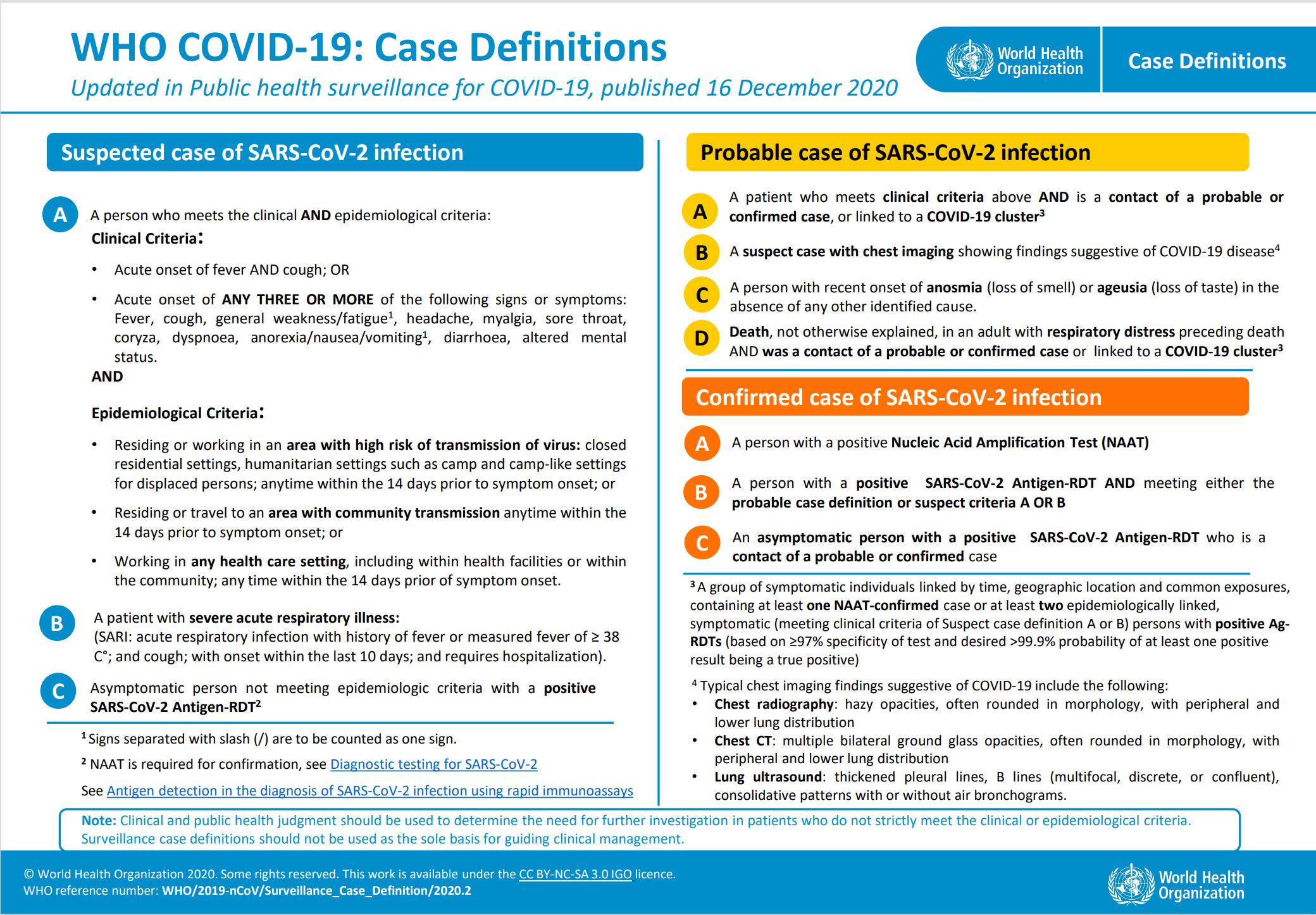
ndard case definitions for COVID 19 can be found by accessing the following link:
https://www.who.int/publications/i/item/WHO-2019-nCoV-Surveillance_Case_Definition-2020.2
However, definitions may change during the outbreak, so health teams need to keep updated with these.
Only laboratory diagnostic tests can confirm COVID 19 case diagnosis. Such tests might require collecting and transporting samples to laboratories, which is challenging in remote settings.
Laboratory tests to confirm the presence of SARS-CoV-2 are hazardous, so laboratory workers and health workers handling samples must adhere to rigorous safety protocols to protect themselves.
Different laboratory tests are available (RT-PCR, Antigenic), and their use varies according to the purpose and context.
a) Classification per purpose:
- Diagnostic test: The test serves to identify current infections in a person with signs or symptoms consistent with COVID-19 or in a person that is asymptomatic but has recently known or suspected exposure to SARS-CoV-2
- Screening test: Screening helps identify unexpected infections in asymptomatic people who do not suspect or report exposure to SARS-CoV-2 and thus prevent further transmission. Whenever implemented, serial testing is a component of the comprehensive program and not a substitute for other measures, such as COVID-19 vaccination, social distancing, mask-wearing, hand hygiene, cleaning and disinfection, and adequate ventilation.
b) Classification per type and per mode of action:
- RT-PCR (NAAT): The test detects viral RNA and indicates a current or a recent infection but without direct evidence for a virus capable of replicating or being transmitted to others. RT-PCR is a high-sensitivity, high-specificity test. The test result interpretation should consider the cycle threshold (CT) value (less than 35) and the patient's clinical condition.
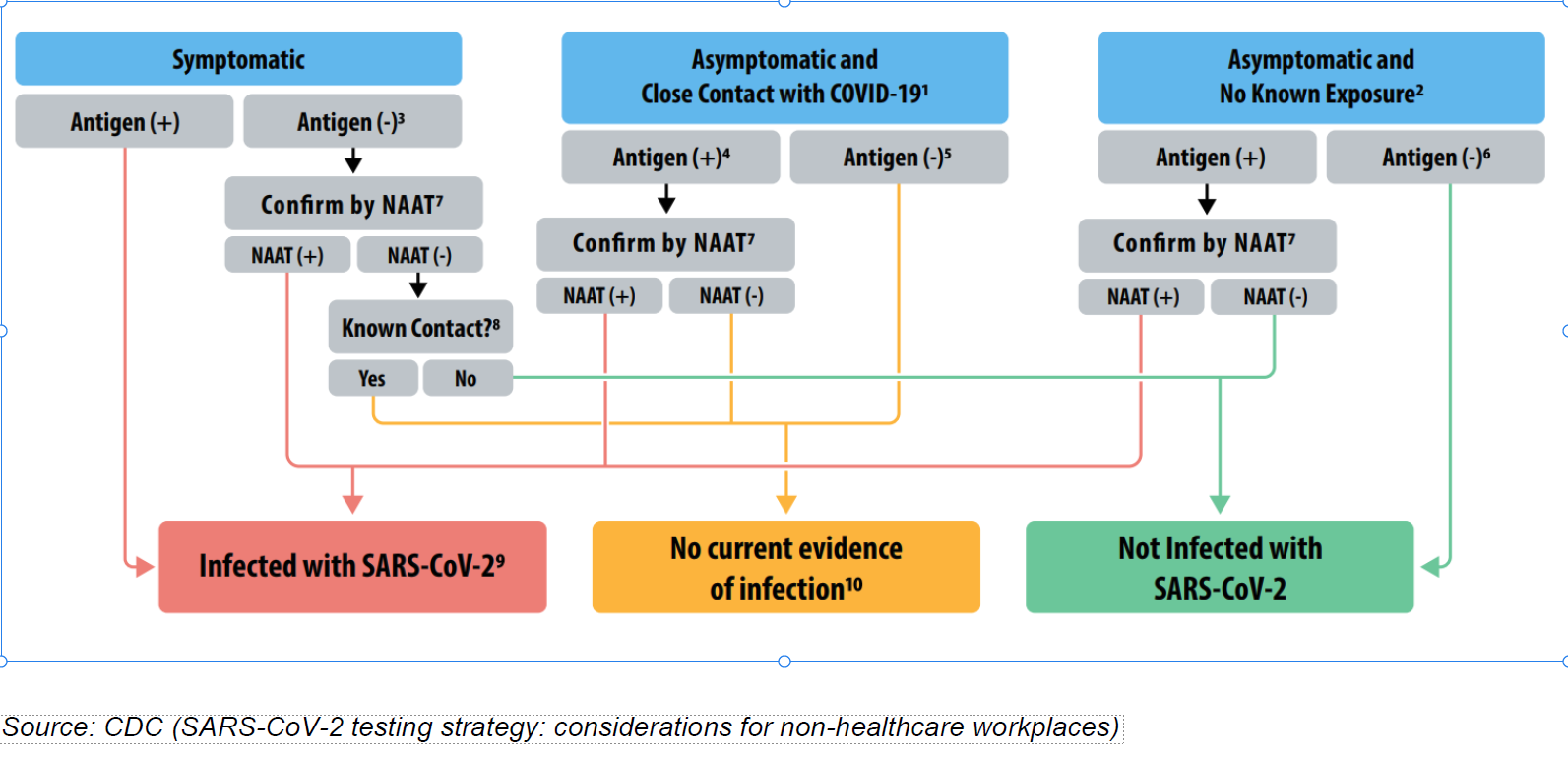
- - Antigenic test: Antigenic tests detect the presence of a specific viral antigen. The test has similar specificity but is less sensitive than RT-PCR, and results are presumptive (preliminary results) and need confirmation with an RT-PCR (NAAT). (e.g., a negative test in persons with symptoms or a positive test without symptoms
1. For use by mobile teams or health centres:
2. For use by hospitals and surveillance teams only: